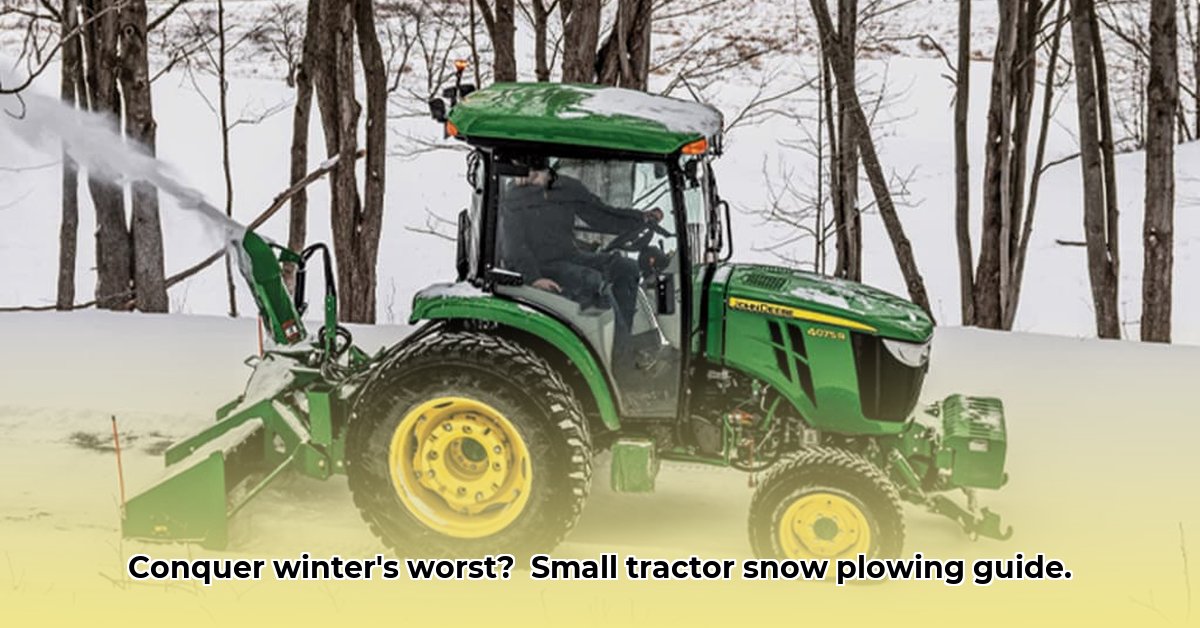
Winter's arrival often means battling significant snowfall. This guide helps you choose the right small tractor to efficiently and safely clear your land, considering sustainability, cost-effectiveness, and safety. We'll cover everything from sizing to maintenance, ensuring you make an informed decision. For more detailed information on snowblower tractors, check out this helpful resource: snowblower tractors.
Sizing Up Your Needs: Matching Tractor to Property
Before exploring tractor models, assess your property. Consider the size of the area needing clearing, typical snowfall amounts, and terrain complexity. A small tractor suits smaller properties and light snowfall, while a larger, more powerful model handles extensive acreage and heavy snow. Steep slopes demand a tractor with superior traction and power.
Understanding Tractor Power Beyond Horsepower
While horsepower is a key factor, it's not the sole determinant. Power Take-Off (PTO) horsepower, indicating the power supplied to attachments like snow plows or blowers, is equally critical. Sufficient PTO horsepower prevents straining the tractor and attachments, avoiding breakdowns. Fuel efficiency is another crucial factor. A fuel-guzzling tractor, even if initially cheaper, increases long-term operational costs.
Here's a comparative example:
| Feature | Small Tractor (e.g., Kubota BX Series) | Medium Tractor (e.g., Kubota L Series) |
|---|---|---|
| Horsepower (HP) | 20-25 | 40-60 |
| PTO Horsepower (HP) | 12-15 | 30-40 |
| Fuel Tank (gallons) | 4-6 | 8-12 |
| Ideal For | Smaller properties, light to moderate snow | Larger properties, heavy snow |
| Approximate Cost | Lower | Higher |
Note: Specifications vary by model and manufacturer. Always consult manufacturer data.
Attachments: Expanding Tractor Versatility
Snow removal tractors are surprisingly versatile. Beyond snow plows, consider snow blowers (ideal for deep snow), and front-end loaders for year-round utility. Choose a tractor compatible with multiple attachments for maximized investment value.
Maintenance Matters: Long-Term Cost Considerations
Regular maintenance is crucial for extending tractor lifespan and avoiding costly repairs. This includes oil changes, filter replacements, and tire pressure checks. Proper maintenance minimizes environmental impact by preventing fluid leaks. Prioritize tractors known for their reliability and ease of maintenance, considering parts availability and repair costs.
"Regular maintenance is an investment that pays off in the long run," says Dr. Amelia Hernandez, Agricultural Engineering Professor at the University of California, Davis.
Safety First: Prioritizing Operator Well-being
Safety is paramount. A Roll-Over Protection Structure (ROPS) is essential to prevent serious injury if the tractor rolls over. Always read the operator's manual thoroughly before use and consider professional training.
Making Your Decision: Balancing Needs and Budget
The best small tractor depends on individual needs and budget. Consider property size, typical snowfall, budget, and ongoing costs (fuel, maintenance). Carefully weigh the pros and cons of various models, choosing one that aligns with your needs and financial resources.
Three Pivotal Points to Remember:
- Proper sizing is crucial for efficient and safe snow removal.
- Fuel efficiency significantly impacts long-term costs and environmental impact.
- Regular maintenance is essential for maximizing the tractor's lifespan and safety.
Step-by-Step Guide to Choosing Your Tractor:
- Assess your property: Measure the area requiring snow removal and note terrain features (hills, uneven ground).
- Determine snowfall: Estimate your typical annual snowfall to gauge the required power.
- Set your budget: Define your maximum purchase price and factor in maintenance costs.
- Research Models: Explore tractors matching your needs and budget, focusing on features (HP, PTO HP, fuel efficiency) and safety (ROPS).
- Compare tractors: Create a comparison table listing key features, prices, and fuel consumption figures.
- Choose the best fit: Select the tractor that optimally balances your needs, budget, and long-term considerations.
- Implement good maintenance: Establish a regular maintenance schedule to keep your tractor running at peak performance.
By following these steps, you can confidently select a small tractor that efficiently and safely clears your land throughout the winter while being mindful of environmental sustainability and cost-effectiveness.